
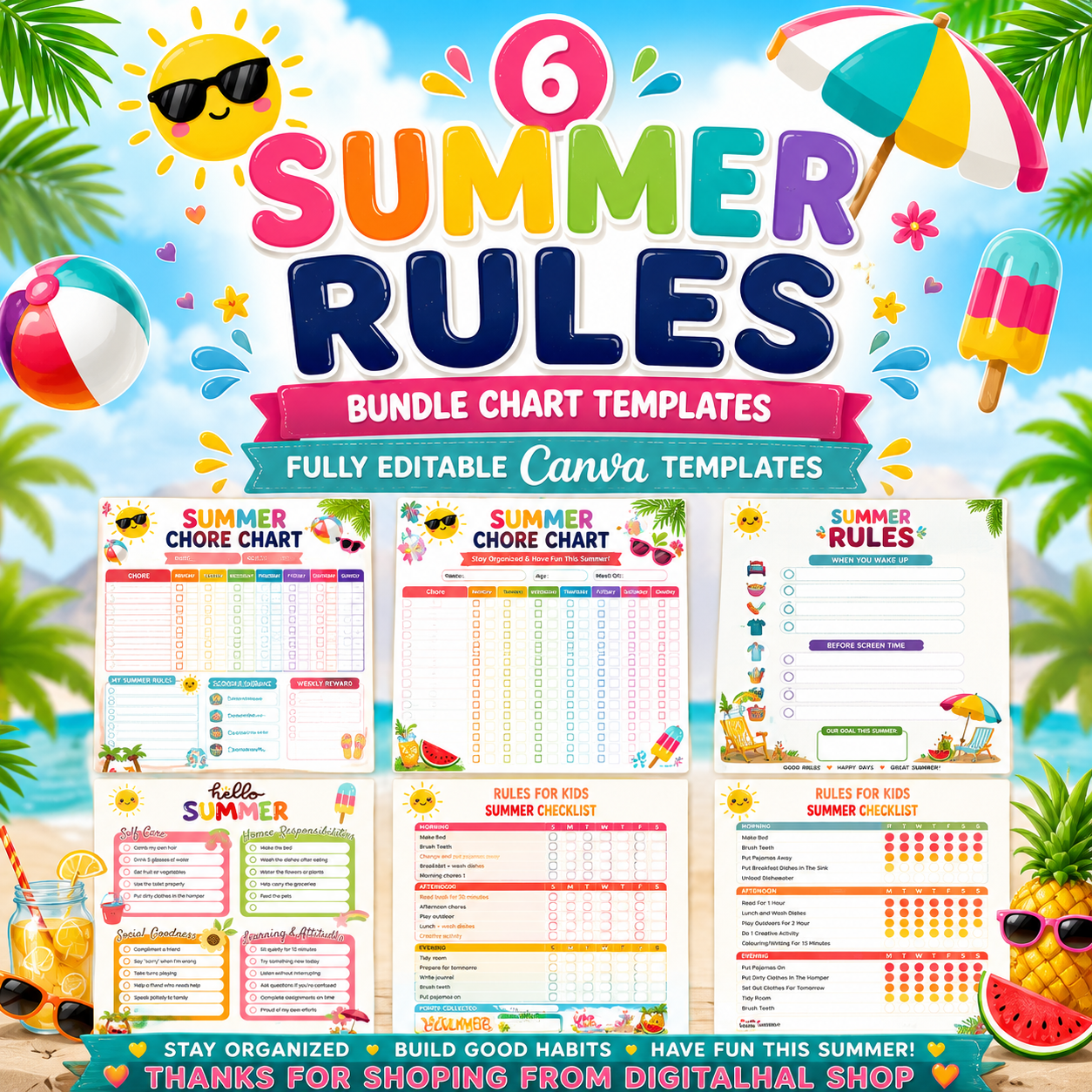

Ah, summer! It’s that magical time of year when school is out, the sun is shining, and dreams of lazy days by the pool fill our heads. But let’s be real, for us parents, summer can sometimes feel less like a vacation and more like a wrestling match with routines that have completely vanished. You know the drill, right? Kids are home all day, and suddenly the house feels a little chaotic. Screen time becomes a constant battle, and the easy rhythm of the school year disappears faster than an ice cream cone on a hot day. so here it is Canva Templates Printable for your kids in this summer.

It’s tough to keep everyone organized and on track when there’s no school bell to guide us. You might find yourself saying, “Didn’t you just watch TV for three hours straight?” or “Please, for the love of all that is holy, put your socks in the hamper!” That’s where a little structure comes in handy. It’s not about ruining the fun of summer, but about making sure everyone stays happy, responsible, and productive. This is exactly why I’m so excited to tell you about the Daily Task Bundle Editable Canva Templates Printable. These awesome tools are here to save your summer sanity!
Why Families Love Using Daily Task Bundles During Summer
Summer days might be long, but they can quickly turn into a free-for-all if you don’t have a plan. That’s why so many families, especially those with busy schedules or who homeschool, find daily task bundles to be total game-changers. They help bring a sense of order without being too rigid.
Here’s why these bundles are a hit:
- Routine Building: They help you set up a predictable rhythm for the day, even without school. This makes kids feel more secure and less likely to ask “What can I do now?” a million times.
- Independence: When kids know what’s expected of them, they can take charge of their own tasks. This builds confidence and frees up your time.
- Reduced Stress: No more constant nagging! Everyone knows their responsibilities, which means fewer arguments and a calmer home for you.
- Better Time Management: Kids learn to manage their time and prioritize tasks, which is a super important life skill.
What Is Included in a Daily Task Bundle Editable Canva Templates Printable?
A good Daily Task Bundle Editable Canva Templates Printable is packed with all sorts of helpful pages to keep your household humming. Think of it as your summer secret weapon for organization. These aren’t just pretty charts, they’re tools you can truly make your own.

Typically, you’ll find:
- Chore Charts Canva Templates Editable: These list daily or weekly tasks your kids need to complete.
- Daily Schedules: A visual guide for how the day will flow, including free time, learning time, and mealtimes.
- Reward Trackers: A fun way to keep tabs on accomplishments and earned rewards.
- Screen Time Logs: Helps everyone monitor and manage their time on electronics.
- Summer Rules Pages: Clearly lays out family expectations for the summer break.
- Editable Canva Templates: This is the best part! You can easily change the colors, fonts, and tasks to fit your family perfectly. No more trying to make a generic chart work for your unique kids!
Summer Chore Chart for Kids Printable Ideas
Getting your kids involved in chores during the summer is a fantastic way to teach responsibility and lighten your load. A summer chore chart for kids printable can make it feel less like a chore and more like a game. Breaking tasks into morning, afternoon, and evening slots helps kids tackle them without feeling overwhelmed.
Here are some ideas for your printable chore chart:
- Morning Chores:
- Make your bed.
- Get dressed.
- Brush teeth and comb hair.
- Put pajamas in the hamper.
- Help set the breakfast table.
- Feed pets.
- Afternoon Chores:
- Put away lunch dishes.
- Tidy up your play area or bedroom.
- Water plants.
- Help put away groceries.
- Take out small trash cans.
- Read for 30 minutes.
- Evening Chores:
- Help set the dinner table.
- Clear your plate after dinner.
- Help load the dishwasher.
- Pick up toys in common areas.
- Lay out clothes for the next day.
- Help with a quick family tidy-up.

Summer Chore Chart for Kids by Age
It’s important to give kids chores that are right for their age. This makes sure they can succeed and don’t get frustrated. A summer chore chart for kids by age helps you know what’s a good fit for your child.
Here’s a general guide:

| Age Group | Suggested Chores | Benefits |
|---|---|---|
| Ages 4, 6 | Pick up toys, put books on shelves, help feed pets, put dirty clothes in hamper, wipe up small spills, help set table. | Builds cooperation, teaches basic tidiness, helps them feel like a valued part of the family. |
| Ages 7, 10 | Make their bed, put away clean laundry, empty small trash bins, help load/unload dishwasher, sweep small areas, simple meal prep, manage small amounts of money. | Fosters independence, develops fine motor skills, teaches responsibility for belongings and shared spaces. |
| Ages 11, 13 | Wash dishes, vacuum/mop, take out trash, care for pets, prepare simple meals with supervision, do their own laundry (with help at first). | Develops life skills, encourages attention to detail, prepares them for greater self-sufficiency. |
| Ages 14, 16 | Full laundry cycles, grocery shopping, helping with yard work (mowing), cooking family meals, watching younger siblings, cleaning bathrooms. | Promotes full independence, prepares for adulthood, builds confidence in managing a household. |
Summer Chore Chart for Teens
For your teenagers, summer chores can go beyond just tidying up. A summer chore chart for teens can be a way to teach them real-world responsibility and prepare them for life after high school. It’s a chance to step up and take on bigger roles in the household.
You can use these charts to focus on:
- Responsibility: Giving them bigger tasks like managing lawn care or taking charge of a weekly grocery trip.
- Time Management: They learn to balance chores with their summer jobs, social plans, and other activities.
- Earning Privileges: Completing chores can be tied to earning things like later curfews, car privileges, or extra screen time.
- Allowance Opportunities: More involved tasks can come with a monetary reward, teaching them about earning and managing money.


Summer Chore Chart for Kids With Money
Tying chores to money can be a powerful motivator for kids, especially older ones. A summer chore chart for kids with money helps them understand the value of work and how to manage their earnings. It’s a practical way to teach financial literacy from a young age.
Here’s how you can make it work:
- Reward Systems: Decide what chores are “expected” (just part of being in the family, like making their bed) and what chores are “extra” for pay. You can set a clear amount for each extra task.
- Allowances: Many parents use a base allowance, perhaps $1 per week per year of age, and then offer additional pay for extra chores. For example, a 10-year-old might get $10 a week as a base, plus extra for washing the car or mowing the lawn.
- Motivation: Kids are often more motivated when they have a goal in mind. Help them pick something they want to save for, like a new video game, a special outing, or even a contribution to a family vacation. You can even encourage them to use the “spend, save, give” system for their allowance, typically splitting money into categories like 50% for spending, 40% for saving, and 10% for giving to charity. This teaches them valuable habits.
Summer Rules for Kids Printable PDF Free Download
Summer shouldn’t be a free-for-all, even if it feels that way sometimes! Having clear expectations makes a huge difference. That’s where a summer rules for kids printable PDF free download comes in handy. These printables help you set boundaries in a fun, visual way that kids can easily understand and remember.
The benefits of using these printable PDFs are many:
- Easy Printing: You can quickly download and print them at home, no special equipment needed.
- Home Organization: Posting rules on the fridge or a family command center keeps everyone on the same page.
- Creating Consistency: When rules are written down and visible, it’s easier for everyone to stick to them. It also reduces arguments because you can just point to the chart!
Looking for a summer rules for kids printable pdf or even a summer rules for kids printable pdf free option? Many parenting bloggers and printable shops offer these, so keep an eye out for a summer rules for kids printable pdf free download that fits your family’s style.
Summer Rules for Kids That Actually Work

You want summer rules that actually make a difference, right? Rules that help your kids grow, stay healthy, and enjoy their break without constant battles. A good summer rules checklist for kids should be clear, positive, and something you can easily refer back to. When you make these rules together, kids are more likely to follow them.
Here’s a checklist of summer rules that tend to work well:
- ✓ Respect others: Use kind words and actions with family and friends.
- ✓ Complete chores: Finish your daily responsibilities before asking for screen time or going out.
- ✓ Limit screen time: Follow our family’s screen time rules and earn your time wisely.
- ✓ Spend time outdoors: Get outside and play every day, rain or shine!
- ✓ Practice kindness: Look for ways to help others and be a good friend or sibling.
- ✓ Follow safety rules: Whether at the pool, on bikes, or playing outside, always be safe.
Using a summer rules for kids printable or a summer rules for kids editable template means you can customize it to fit your family’s unique values and needs. This makes the rules feel more personal and impactful.
Summer Screen Time Rules for Kids
Ah, screen time. It’s often the biggest challenge of summer break! With no school, it’s easy for kids to fall into the habit of endless hours on devices. Setting clear summer screen time rules for kids is super important for their well-being and to keep a peaceful home.
When you create your rules, think about different types of devices:


- Tablets: How long can they play games or watch videos? Are there educational apps they can use?
- Phones: What are the rules for texting and social media? When does the phone need to be put away?
- Gaming: How many hours of video games are allowed per day or week? Are there specific games that are off-limits?
- Educational Apps: Encourage using apps that teach new skills or review school subjects. You can even make this a requirement before free play screen time.
Many parents find it helpful to create a “No Screen Time Until” list where kids need to complete certain tasks (like chores, reading, and outdoor play) before they earn any screen time. This uses related keywords like kids summer electronics rules and kids summer screen time rules naturally and makes sure they’re doing other important things first.
Summer Rules for Teens
Teenagers need structure too, even if they sometimes pretend they don’t! Establishing clear summer rules for teens helps them stay grounded and responsible as they enjoy their growing independence. It’s about giving them freedom within a framework.
When you talk about summer rules with your teens, consider these points:
- Social Media Limits: Discuss healthy boundaries for social media use, including when it’s appropriate to post and engage.
- Household Responsibilities: Teens should have significant roles in keeping the house running smoothly, like regularly contributing to cleaning, meal prep, or yard work.
- Time Management: Help them balance summer jobs, social activities, and personal responsibilities. This is a great skill for their future.
- Independence: Give them opportunities to make choices and experience the natural consequences of those choices, within safe limits.
Creating a Summer Rules Book
Want to make your summer rules extra special and truly owned by your family? Consider creating a summer rules book! This is a fantastic way to get everyone involved and make the rules feel less like decrees and more like shared agreements.
Here’s how you can do it:
- Family Participation: Sit down together and brainstorm what everyone wants the summer to look like. What are the fun things you want to do? What responsibilities need to be covered?
- Goal Setting: Work together to set family goals for the summer. Maybe it’s a certain number of books read, a big family project, or a weekend adventure. This internal link might offer some inspiration for setting goals: 60 Life Goals How to Design Your Dream Life and Create a Life You Love.
- Printable Templates: Use some of the editable templates from your Daily Task Bundle Editable Canva Templates Printable to design the pages of your book. You can include sections for “Our Summer Goals,” “Our Daily Rhythm,” “Our Screen Time Agreements,” and “Our Family Fun List.” Let kids draw pictures or add stickers to make it truly theirs.
DIY Summer Chore Chart Ideas Parents Love

Sometimes, making something yourself makes it feel more special and engaging. If you’re feeling crafty, there are tons of DIY summer chore chart ideas that parents and kids alike enjoy. These often add a personal touch and can be really fun to create together.
Here are a few popular ideas for your summer chore chart ideas:
- Color Coding: Assign each child a color and use that color for their tasks on a shared board.
- Stickers: Kids love stickers! Let them put a sticker next to each completed chore. You can even have a “sticker reward” once they collect a certain number.
- Rewards Jar: For younger kids, a jar filled with small, fun rewards (like “extra story time” or “choose dinner”) can be a great motivator when the chart is complete.
- Family Challenges: Turn chores into a game! “Who can get their morning routine done fastest today?” or “Let’s see if we can all earn enough points for a pizza night!”
- Magnetic Boards: Use a cookie sheet or a magnetic whiteboard with printable magnetic chore tiles. Kids can move the tiles from “To Do” to “Done.”
Printable Resources Parents Frequently Use
You’re not alone in wanting a more organized and fun summer! Many parents rely on printable resources to help them manage daily life and keep their kids engaged. These tools make a big difference in reducing stress and creating a smoother flow for the family.
Some of the most popular printable resources include:
- Chore Charts: Of course! These are essential for assigning and tracking responsibilities.
- Daily Planners: Great for laying out the day’s activities, appointments, and quiet times.
- Routine Trackers: Helps solidify new habits, like morning or bedtime routines.
- Reward Charts: Visual tools to track progress towards a desired reward or goal.
You might find great options from various online creators. For example, some parents love the variety and design of printables that remind them of resources like “thirty handmade days printables” for their clear, helpful, and visually appealing designs.

Frequently Asked Questions
Let’s tackle some common questions about keeping your summer organized and your kids happy!
What is the best summer chore chart for kids?
The best summer chore chart for kids is one that is age-appropriate, easy to understand, and visually engaging. It should clearly list tasks, allow for tracking progress (like checkmarks or stickers), and ideally, be customizable to your family’s needs. Many parents love editable Canva templates for this reason, as they can tailor it exactly. Some also find seasonal chore charts helpful.
What age should children start chores?
Children can start helping with chores as early as 13-14 months old by imitating you. Toddlers (ages 2-3) can begin with simple tasks like picking up toys or putting clothes in a hamper. Introducing chores early teaches them responsibility and that they are a contributing part of the family.
How much allowance should kids earn?
Allowance amounts vary by age and family budget, but a common starting point is $1 per week per year of age. For example, a 7-year-old might get $7, and a 10-year-old might get $10. Teens often receive more, with averages around $18-$25 per week for older teens. The key is to make the amount large enough for them to make meaningful spending and saving choices.
What is the 3 3 3 rule for children?
The 3-3-3 rule for children is a grounding technique used to help manage anxiety. It asks a child to name three things they can see, three things they can hear, and then move three parts of their body (like wiggling fingers or shrugging shoulders). This simple exercise helps redirect attention from anxious thoughts to the present moment, calming the nervous system.
How to create a summer schedule for kids?
To create a summer schedule for kids, start by listing non-negotiables like wake-up, meal, and bedtimes. Then, involve your kids in brainstorming fun activities and daily responsibilities they want to include. Use time blocks (morning, afternoon, evening) rather than rigid minutes to allow for flexibility. Make sure to mix structured activities with plenty of downtime and outdoor play. Post the schedule visually so everyone can follow it.
What are 10 safety rules for kids at home?
Here are 10 important safety rules for kids at home:
- Know your name, number, and address.
- Don’t eat anything given by a stranger.
- Never climb fences.
- Don’t walk off the yard alone.
- Playing with fire is not allowed.
- Never go anywhere with a stranger.
- No one is allowed to touch your body without your permission (teach “good touch, bad touch”).
- If you get lost, stay where you are.
- Do not open the door for strangers.
- Be familiar with the family emergency contact list.
What is the 7 7 7 rule for kids?
There are two common interpretations of the 7-7-7 rule for kids. One version is a screen time guideline, suggesting limiting screen time to 7 hours per week, maintaining 7 feet distance from screens, and avoiding screens 7 days before important events. The other, more common parenting interpretation, focuses on connection: spending three separate 7-minute blocks of focused, undivided attention with your child each day (morning, after school/work, and before bedtime). This second rule helps build strong parent-child bonds and emotional well-being.
How can printable summer rules help reduce screen time?
Printable summer rules, especially those focused on screen time, are incredibly effective because they create clear visual expectations. When kids see a checklist of tasks (chores, reading, outdoor play) they need to complete *before* earning screen time, it turns screen time into a privilege they earn, rather than an automatic right. This structured approach reduces arguments, encourages other activities, and helps children develop self-regulation and responsibility.
Final Thoughts
Summer break is a precious time for families, full of potential for growth, fun, and making amazing memories. But let’s be honest, it can also bring its fair share of challenges, especially when it comes to keeping kids organized and happy. That’s why having a solid plan, even a flexible one, is key.
I really encourage you to try creating some routines and setting clear expectations this summer. It makes such a difference in reducing screen time battles and building a sense of responsibility in your kids. Using printable tools consistently, like a Daily Task Bundle Editable Canva Templates Printable, can be your secret weapon. You can customize them to perfectly fit your family, making the process engaging and fun for everyone. When your kids know what’s expected, they thrive, and your home can be a happier, more organized place for all. So go ahead, embrace the power of printables and make this summer your best one yet!
You can truly design your dream life, and that includes your dream summer. Don’t let the long days overwhelm you; instead, use these tools to create a season filled with purpose, play, and peace.


